
Chapter 7 bankruptcy offers a path to eliminate qualifying debts and start fresh financially. Many people in Florida face overwhelming debt from medical bills, credit cards, or job loss, and don’t know where to turn.
At Harnage Law, PLLC, we help clients understand whether Chapter 7 is right for their situation. An attorney for Chapter 7 can guide you through the process and protect your rights every step of the way.
How Chapter 7 Stops Debt and Protects What Matters
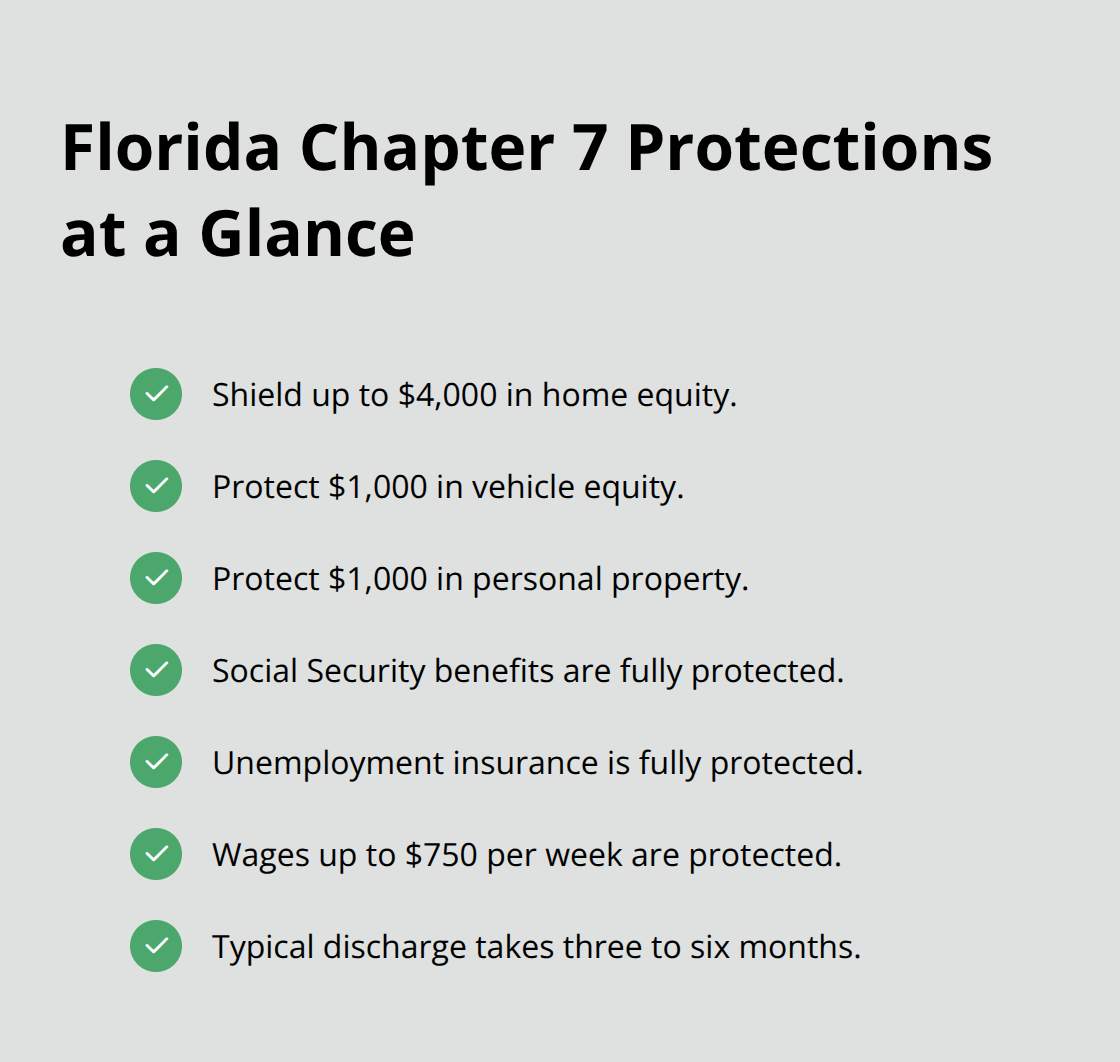
Chapter 7 bankruptcy eliminates unsecured debts like credit card balances, medical bills, and personal loans through a liquidation process. When you file, the court appoints a trustee who may sell non-exempt assets to pay creditors, but Florida law protects significant property. You can shield up to $4,000 of home equity, $1,000 of vehicle equity, and $1,000 in personal property under Florida exemptions. Social Security benefits, unemployment insurance, and wages up to $750 per week remain fully protected, regardless of how much debt you carry. The discharge typically completes within three to six months, giving you a genuine fresh start rather than years of repayment obligations.
Stopping Creditor Harassment Immediately
Filing a Chapter 7 petition triggers an automatic stay that halts collection calls, lawsuits, wage garnishments, and foreclosure proceedings the moment the court receives your paperwork. Creditors cannot contact you directly once the stay takes effect, and violations result in damages against them. This protection applies to all unsecured debts and gives you breathing room to reorganize your finances without constant pressure. If creditors continue contacting you after filing, the bankruptcy process handles those violations for you. Many people report that stopping the harassment alone makes the filing worthwhile, as the psychological relief is substantial.
What Debts Chapter 7 Cannot Eliminate
Not all debts disappear in Chapter 7, and understanding which ones remain matters significantly for planning your post-bankruptcy budget. Student loans, recent tax obligations, child support, alimony, and debts obtained through fraud cannot be discharged. Court fines and criminal restitution orders also survive bankruptcy. If you have secured debts like a mortgage or car loan, you must decide whether to keep the property and continue payments or surrender it. These distinctions shape your long-term financial plan, and working through them with a bankruptcy attorney prevents costly mistakes.
How a Bankruptcy Attorney Guides Your Decisions
A bankruptcy attorney helps you identify which assets Florida law protects and how to structure your filing for maximum protection. They review your complete financial picture-income, expenses, assets, and debts-to determine whether Chapter 7 truly fits your situation. The attorney also prepares you for the Meeting of Creditors (the 341 meeting) and handles creditor communications on your behalf. They explain the difference between debts you can eliminate and those that survive, so you understand your obligations after discharge. This guidance transforms the bankruptcy process from overwhelming to manageable, allowing you to focus on rebuilding rather than navigating complex legal requirements.
Is Chapter 7 Right for Your Florida Situation
When Chapter 7 Makes Financial Sense
Filing Chapter 7 makes sense when unsecured debts spiral beyond your ability to pay and creditors actively pursue collection. If debt collectors call regularly, wage garnishment affects your paycheck, or medical bills stack alongside credit card balances, Chapter 7 stops the pressure immediately through the automatic stay. The process works best for people whose income dropped due to job loss, illness, or reduced hours, leaving them unable to service debt even with a budget overhaul.
Income Thresholds That Determine Eligibility
You should seriously consider filing if your monthly income falls below Florida’s median income threshold for your household size. As of April 2024, the U.S. Trustee’s office sets these thresholds at $62,973 annually for a single person, $77,639 for two people, $89,908 for three, and $104,069 for four, with additional amounts for larger households.
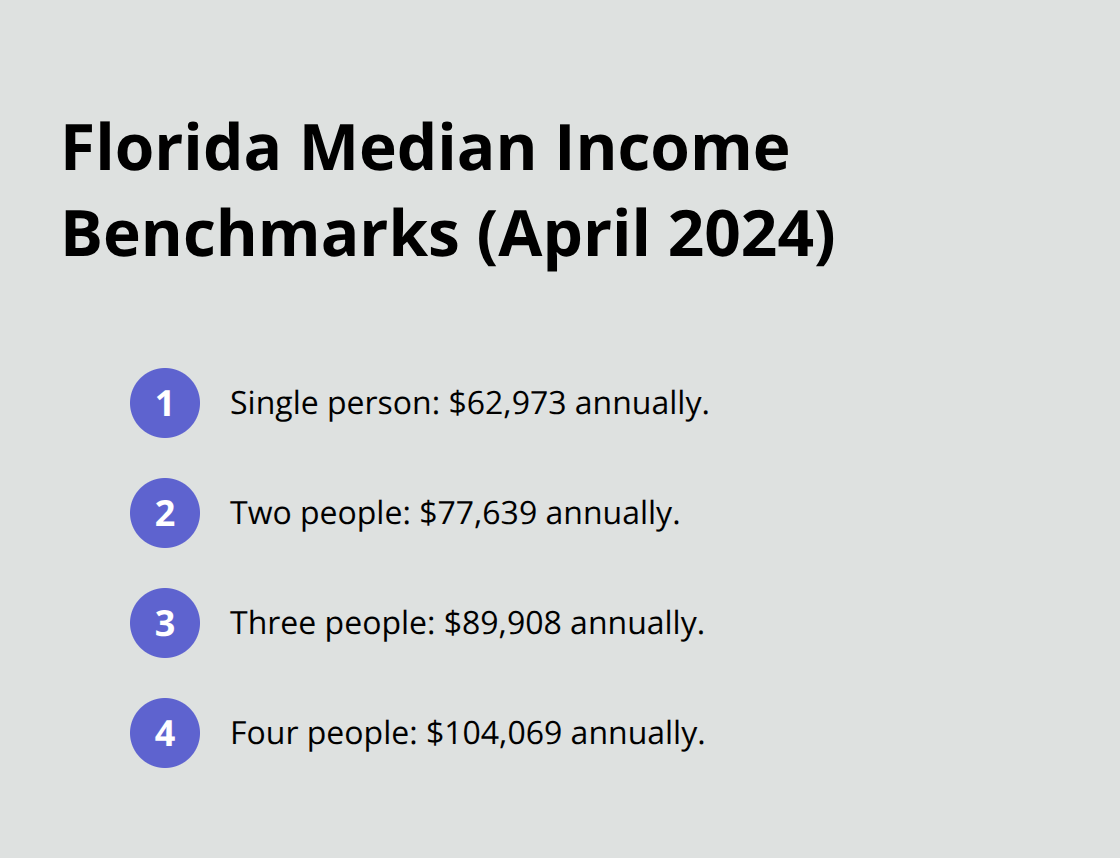
If your household income averages below these numbers over the past six months, you likely qualify without needing to pass the means test.
The Means Test for Higher Earners
Even if your income exceeds the median, you may still qualify through the means test, which allows deductions for essential expenses like mortgage payments, childcare, insurance, court-ordered support, and taxes before calculating your disposable income. The means test multiplies your adjusted monthly income by 60 to determine whether you have sufficient disposable income over five years. If that figure falls below $9,075, you qualify for Chapter 7 discharge.
Timeline and Required Steps
The timeline from filing to discharge typically runs three to six months, though court schedules and case complexity affect this range. Within 14 days of filing, you must pay the $338 filing fee unless you qualify for a waiver or installment arrangement. Before filing, you must complete a credit counseling course from an agency approved by the U.S. Trustee’s office (roughly $50 to $100, taking about two hours online).
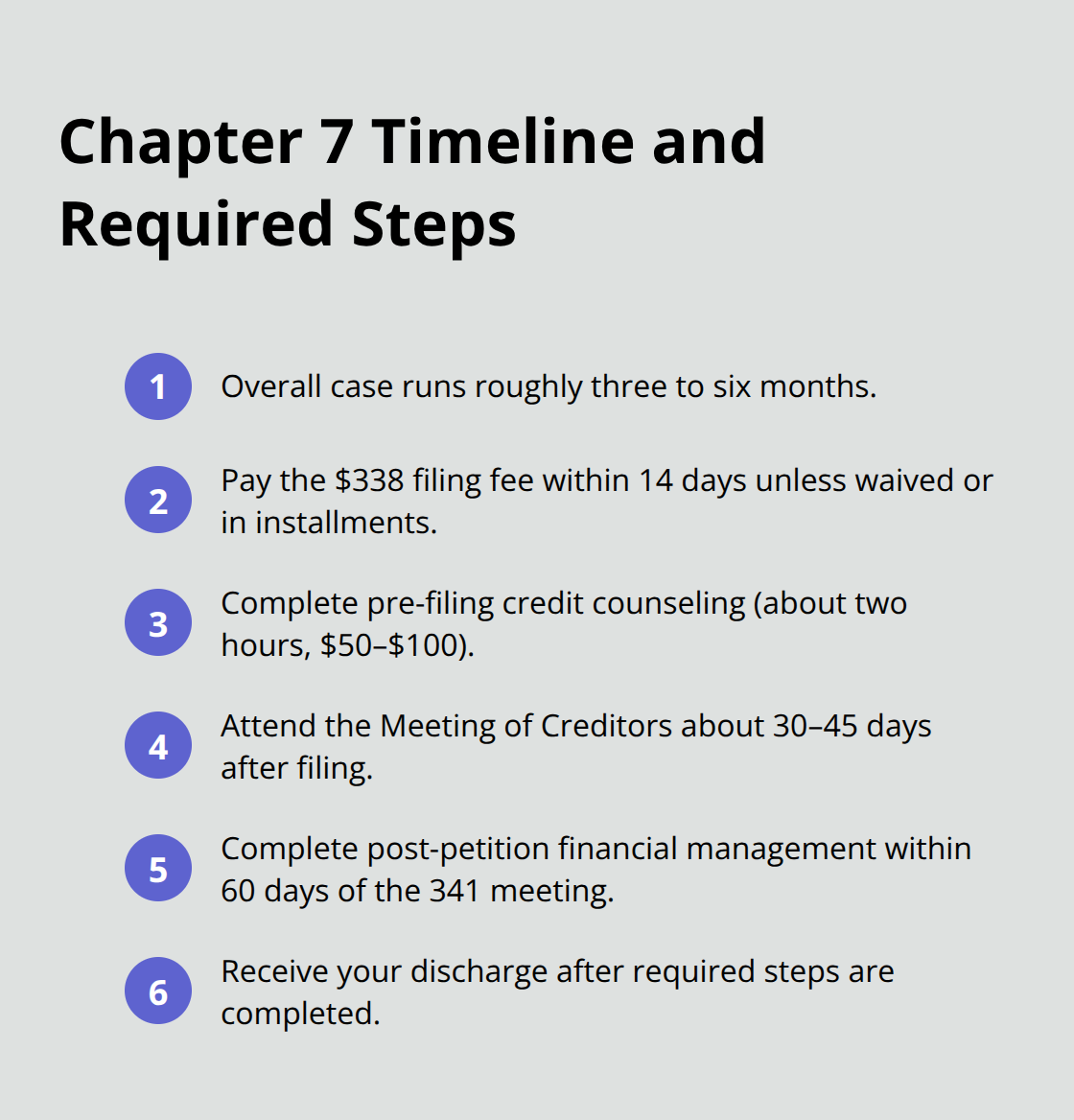
After filing, you attend the Meeting of Creditors around 30 to 45 days later, where the trustee and creditors can ask about your finances and assets. Most meetings are straightforward and brief, especially with an attorney present to manage questions. You then complete a post-petition financial management course within 60 days of the 341 meeting to receive your discharge order.
Taking Your First Step Forward
The key actionable step is calculating your household income right now and comparing it to the Florida median for your size to get a preliminary sense of eligibility. This calculation takes minutes and gives you clarity on whether Chapter 7 fits your situation. Once you understand your income position, the next critical decision involves identifying which assets Florida law protects and how to structure your filing for maximum protection.
How a Bankruptcy Attorney Shields You From Legal Pitfalls
Navigating Complex Paperwork and Court Requirements
The bankruptcy filing process demands precise paperwork, strict deadlines, and court compliance that trip up people filing without help. The U.S. Trustee’s office requires original wet signatures on your petition and related documents, exact formatting for your creditor matrix with only names and addresses, and complete schedules covering everything from assets to monthly expenses. Courts reject filings with missing forms, outdated templates, or incorrect information, forcing you to refile and restart the clock. An attorney prepares all documents using current official bankruptcy forms, ensures your financial statements match across schedules, and submits everything correctly the first time.
Meeting Critical Deadlines
The filing fee itself is $338 as of December 2023, and you must pay it within 14 days or the court dismisses your case entirely. Before filing, you must complete a credit counseling course from an agency on the U.S. Trustee’s approved list. After filing, you finish a post-petition financial management course within 60 days after your Meeting of Creditors to receive your discharge. Missing either requirement blocks your discharge indefinitely. A bankruptcy attorney verifies you complete both courses, tracks the deadlines, and confirms course certificates reach the court on time.
Preparing for the Meeting of Creditors
During the Meeting of Creditors around 30 to 45 days after filing, the trustee questions you about your assets, income, and financial decisions under oath. Creditors sometimes appear and ask aggressive questions designed to uncover hidden assets or challenge your discharge eligibility. An attorney prepares you thoroughly for this meeting, coaches you on answering truthfully without volunteering unnecessary information, and attends to intervene if questions become inappropriate or legally improper.
Claiming Exemptions Correctly
Florida law protects certain assets from liquidation, but only if you claim exemptions correctly on your schedules. You can shield up to $4,000 of home equity, $1,000 of vehicle equity, and $1,000 in personal property (plus a wildcard exemption of $4,000 if you do not claim the homestead exemption). Wages up to $750 per week and Social Security benefits remain fully protected. An attorney identifies which assets qualify under Florida exemptions, determines the values accurately, and lists them properly on your paperwork so the trustee cannot liquidate them. Failing to claim exemptions means losing those assets unnecessarily.
Stopping Creditor Violations
Creditors sometimes violate the automatic stay by continuing collection calls, lawsuits, or wage garnishments after you file. The stay takes effect immediately when the court receives your petition and stops all collection activity, but some creditors ignore this requirement. An attorney monitors your case and responds to violations by filing motions for relief from the automatic stay or sanctions against the creditor. You can recover damages from creditors who willfully violate the stay, and an attorney pursues these claims on your behalf.
Final Thoughts
We at Harnage Law, PLLC understand that filing for Chapter 7 bankruptcy feels overwhelming, and the legal process adds stress when you’re already struggling financially. An attorney for Chapter 7 prepares you for the Meeting of Creditors, handles creditor violations, and claims your exemptions correctly so you don’t lose assets unnecessarily. We know Florida bankruptcy law inside and out, from the state’s exemption rules to how local courts handle filings, and we use that knowledge to protect your assets and maximize your fresh start.
The difference between filing alone and working with experienced representation often comes down to whether you keep your assets and receive your discharge on schedule or face dismissals, lost exemptions, and continued creditor pressure. We stop the harassment, respond to aggressive creditors, and manage the deadlines that trip up people filing without help. Financial hardship carries real emotional weight, and we approach your case with compassion rather than judgment.
If you’re ready to explore whether Chapter 7 fits your circumstances, contact us for a free consultation and an honest assessment of your options.