Filing for Chapter 7 bankruptcy in Florida requires meeting seven specific eligibility criteria. Not every debtor qualifies, and missing even one requirement can delay or derail your case.
We at Harnage Law, PLLC help clients understand these Florida Seven eligibility criteria so they can move forward with confidence. This guide walks you through each requirement and shows you exactly what you need to prove.
First Criterion: Florida Residency and Domicile Requirements
The 180-day domicile requirement is the first hurdle you must clear before filing Chapter 7 in Florida. Federal bankruptcy law requires that you establish domicile in Florida for at least 180 days before filing your petition. This means you need to have lived in Florida continuously for six months with the intent to make it your permanent home. The clock starts from the date you move to Florida, not from when you file paperwork. If you moved to Florida fewer than 180 days ago, you cannot file here yet, regardless of other eligibility factors.
Proving your domicile involves gathering concrete documentation that shows Florida residency during those six months. Utility bills, lease agreements, mortgage statements, and driver’s license records all serve as acceptable proof. Tax returns filed in Florida strengthen your case significantly. If you moved to Florida from another state, keep your relocation documents organized and dated.
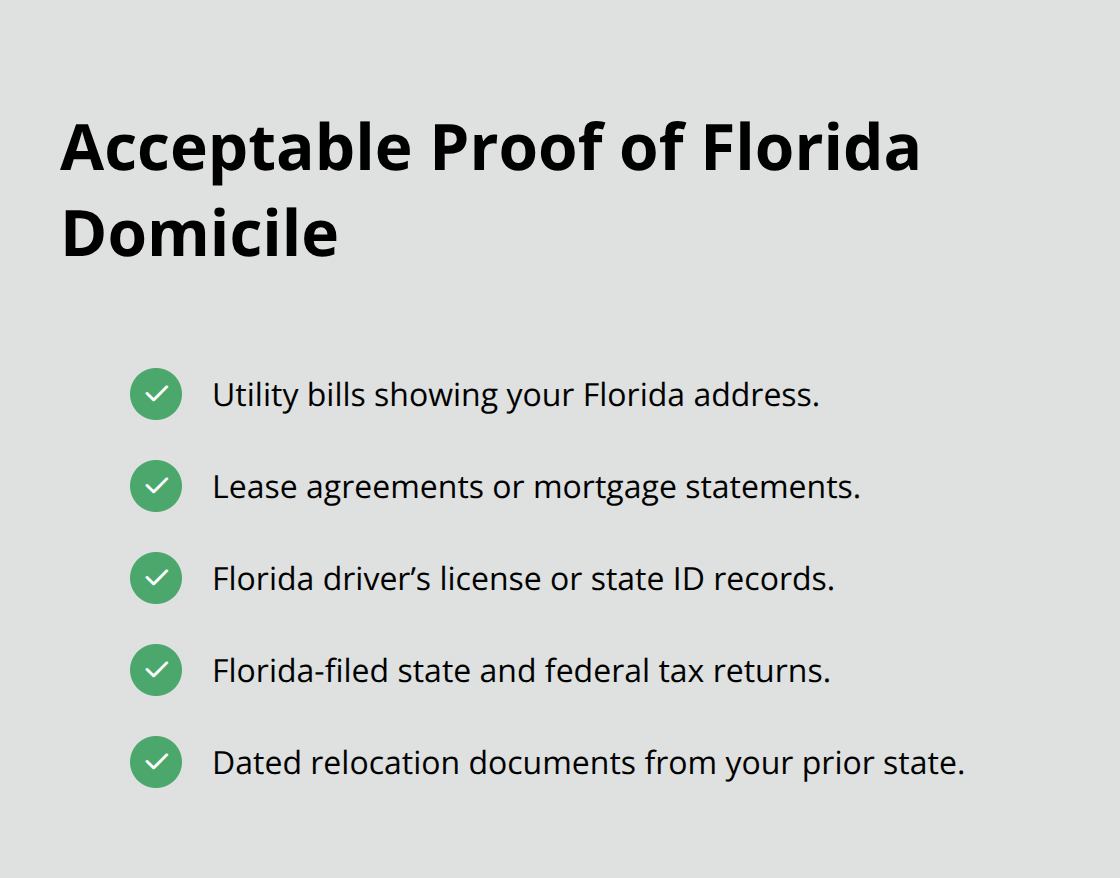
Recent moves complicate your filing location because bankruptcy courts examine whether you established genuine domicile or simply moved to take advantage of Florida’s generous asset exemptions (courts specifically scrutinize cases where filers move to Florida shortly before bankruptcy, so accuracy and honesty matter tremendously in your documentation).
With your domicile established and documentation ready, the next requirement focuses on your income level and how it compares to Florida’s median earnings.
Second Criterion: The Means Test and Income Thresholds
The means test determines whether your income qualifies you for Chapter 7 bankruptcy in Florida. The U.S. Trustee Program sets income thresholds based on family size, and for 2026, the median household income in Florida stands at approximately $75,000 annually for a family of four. If your current monthly income falls below this threshold, you pass the means test automatically and can proceed with Chapter 7. The test uses your average monthly income from the past six months, not just your current earnings. Courts calculate this figure by adding all income sources and dividing by six months to establish a fair baseline.
Income sources that count toward the means test include wages, self-employment earnings, rental income, Social Security benefits, alimony, child support, and unemployment compensation. Temporary income spikes like bonuses or tax refunds get included in your six-month average, which can unexpectedly push you over the median. If you exceed Florida’s median income threshold, you face a second phase of the means test called the disposable income calculation, where deductions for living expenses, taxes, and debt payments determine whether you still qualify. This phase requires detailed financial documentation and complex calculations. Some debtors find their cases dismissed or converted to Chapter 13 when disposable income calculations show they can afford partial repayment plans, which is why understanding your exact income position matters before you file your petition.
Third Criterion: Debt Types That Qualify for Discharge
Not all debts vanish in Chapter 7 bankruptcy, and understanding which ones do matters before you file. Unsecured debts like credit card balances, medical bills, personal loans, and payday loans get eliminated through discharge in most Chapter 7 cases. The Federal Reserve reported that Americans carried over $1 trillion in credit card debt as of 2025, and Chapter 7 directly targets this type of obligation.
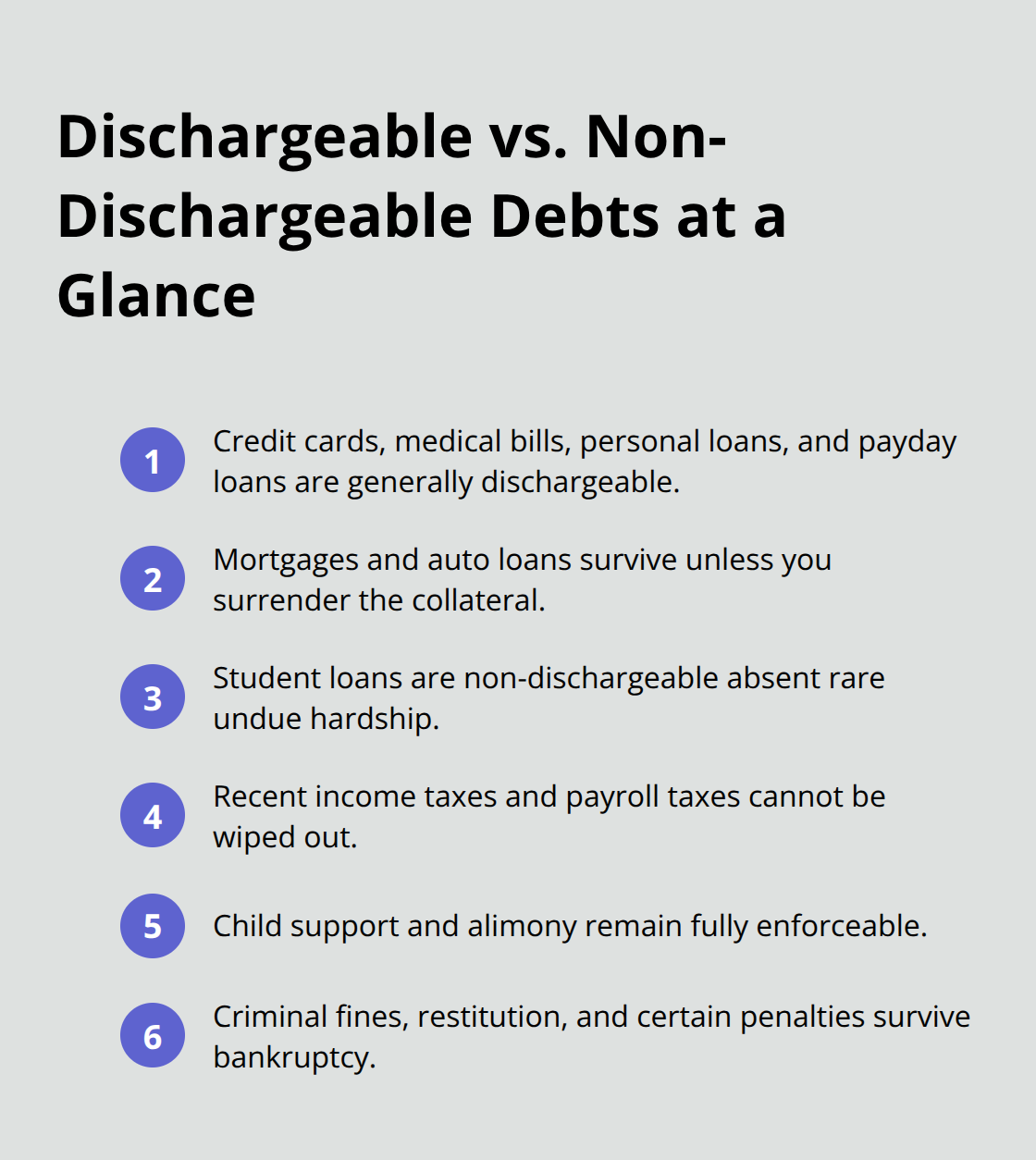
Secured debts tied to collateral, such as mortgages and car loans, typically survive discharge unless you surrender the property. If you want to keep your home or vehicle, you must continue paying these debts even after Chapter 7 completes.
Student loans present a significant barrier to discharge in Florida bankruptcy cases. The Bankruptcy Code treats federal and private student loans as non-dischargeable except in rare circumstances involving undue hardship, which courts interpret extremely narrowly. Recent tax debts also cannot be eliminated, specifically income taxes from the past three years and payroll taxes you owe as a business owner. Child support and alimony obligations remain intact after Chapter 7 discharge because courts prioritize family support obligations. Criminal fines, restitution orders, and certain government-imposed penalties similarly survive bankruptcy.
Your debt profile must contain a substantial portion of dischargeable debts for Chapter 7 to provide meaningful financial relief. If your obligations consist primarily of student loans, recent taxes, or family support payments, Chapter 7 may not solve your financial problems, and Chapter 13 reorganization might better fit your situation. The fourth eligibility criterion examines your bankruptcy history and whether previous filings affect your current case.
Fourth Criterion: Previous Bankruptcy Filing History
The eight-year waiting period between Chapter 7 discharges is a hard rule in federal bankruptcy law that courts enforce strictly. If you filed Chapter 7 bankruptcy and received a discharge within the past eight years, you cannot file again for Chapter 7 relief until that window closes. The clock starts from your discharge date, not from your filing date, so timing matters significantly when planning your next case. Courts verify this through the bankruptcy system’s centralized database, which tracks all filings nationwide. An attempt to file within this window results in automatic dismissal of your petition, wasting time and filing fees.
Time restrictions from other bankruptcy chapters create different rules that affect your eligibility for Chapter 7. If you received a Chapter 13 discharge within the past six years, you must wait those six years before filing Chapter 7. Chapter 13 cases involve three-to-five year repayment plans, and courts want debtors to complete these plans rather than abandon them for Chapter 7 relief. However, if you filed Chapter 13 but did not receive a discharge (perhaps the case was dismissed), the restriction does not apply and you can file Chapter 7 immediately. Previous Chapter 11 filings also trigger the eight-year waiting period for Chapter 7 eligibility.
If your filing history includes multiple bankruptcies across different chapters, calculating your eligibility date requires careful attention to discharge dates and chapter types. The fifth eligibility criterion shifts focus from your past to a mandatory requirement you must complete before filing your petition.
Fifth Criterion: Credit Counseling Completion
Federal law requires you to complete a credit counseling course from an approved agency before filing your Chapter 7 petition in Florida. Courts will dismiss your case if you skip this mandatory step. The counseling must occur within 180 days before you file your bankruptcy petition, so timing your course completion strategically matters. The U.S. Trustee Program maintains the official list of approved counseling agencies in Florida, and you must select from this list to satisfy the requirement. Costs typically range from $50 to $150 for the course, though some agencies offer fee waivers if you demonstrate financial hardship.
The counseling session itself lasts approximately one to two hours and covers budgeting strategies, debt management alternatives, and the consequences of bankruptcy. Upon completion, the agency issues a certificate of completion that you must file with your bankruptcy petition. You must keep this certificate organized with your other bankruptcy documents because courts require proof that you satisfied this obligation before granting discharge. Many filers complete counseling too early or too late, which creates unnecessary delays in their cases. You should schedule your counseling course only after you have gathered all your financial documents and confirmed your Chapter 7 eligibility.
The sixth eligibility criterion focuses on your assets and how Florida’s exemption laws protect your property during the bankruptcy process.
Sixth Criterion: Asset and Exemption Considerations
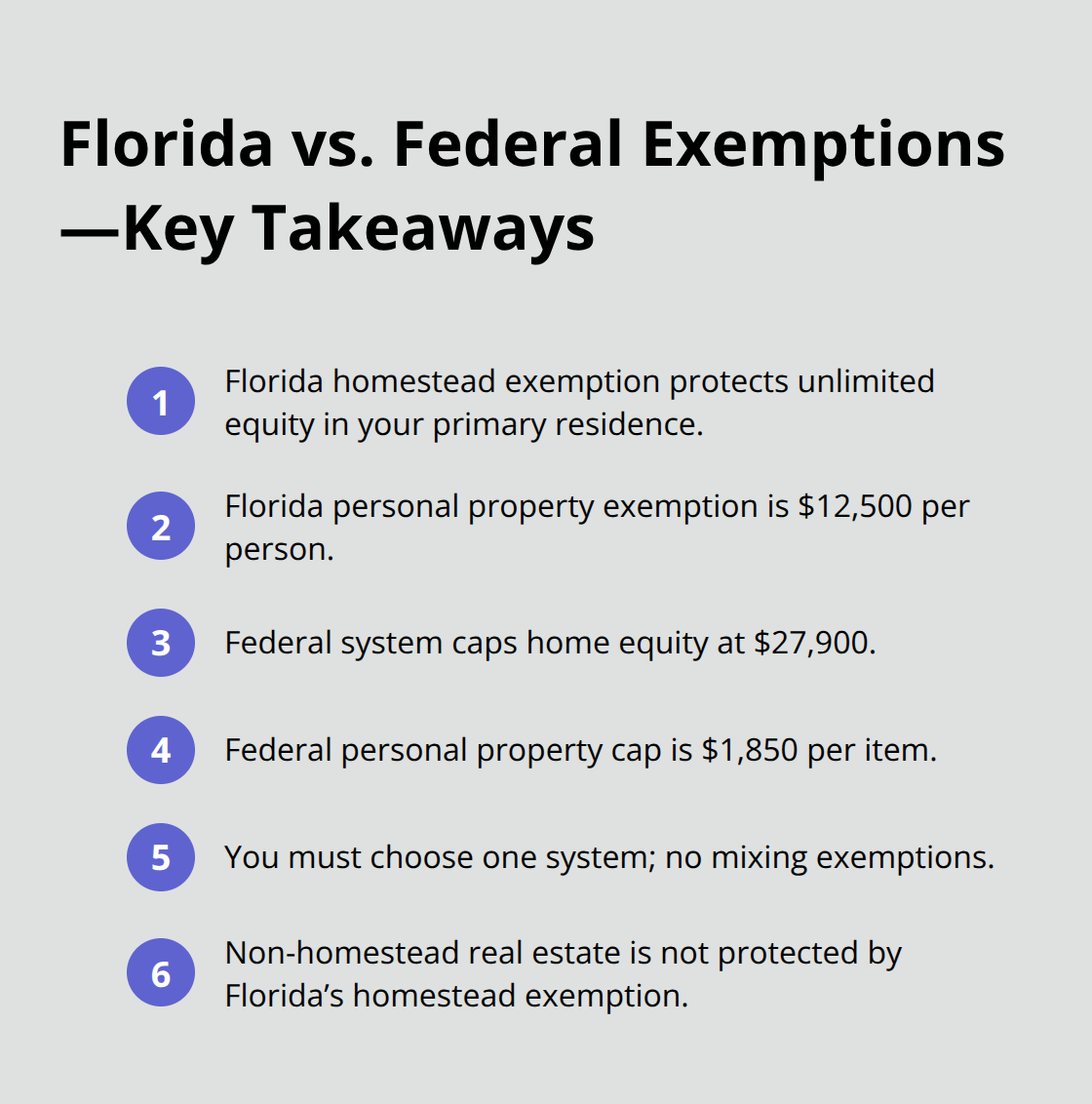
Florida offers some of the most generous asset protection laws in the nation, which directly affects your Chapter 7 eligibility and outcomes. The state’s homestead exemption allows you to protect unlimited equity in your primary residence, a benefit that attracts filers nationwide and explains why courts scrutinize recent moves to Florida. Florida also provides a blanket exemption of $12,500 per person for personal property, which covers vehicles, furniture, electronics, and other belongings you own outright. If you own a vehicle worth $10,000, it falls within this exemption and remains yours after bankruptcy.
The key calculation involves comparing your asset values against these exemption limits to determine what property a trustee might liquidate.
You face a genuine choice between Florida state exemptions and federal exemptions under Bankruptcy Code Section 522, though Florida’s state system typically provides superior protection. Federal exemptions cap home equity at $27,900 and personal property at $1,850 per item, making Florida’s generous homestead and personal property exemptions vastly superior for most filers. You must elect one system or the other before filing your petition; you cannot mix and match exemptions between systems. If you own a vacation property, rental property, or investment real estate, Florida exemptions do not protect this equity, and a trustee will likely liquidate these assets to pay creditors. Calculating your exact exemption position requires detailed asset valuation and honest disclosure of all property you own, which determines whether Chapter 7 makes financial sense for your specific situation.
Your asset position and exemption calculations set the stage for the final eligibility criterion, which examines whether you file your petition with honest intent and accurate financial information.
Seventh Criterion: Good Faith Filing Requirements
Bankruptcy courts examine whether you file your petition with genuine intent to address financial hardship rather than to defraud creditors or manipulate the system. The Bankruptcy Code requires that your filing serve a legitimate purpose, and judges hold authority to dismiss cases that lack good faith. Courts scrutinize your financial records for red flags including large luxury purchases within months before filing, cash advances taken shortly before bankruptcy, or transfers of assets to family members at below-market prices. A $5,000 purchase of jewelry or electronics just weeks before filing your petition raises immediate suspicion about your motives. The American Bankruptcy Institute reports that courts dismiss roughly 1-2% of Chapter 7 cases based on bad faith findings, though the threat remains serious enough to warrant caution in your pre-filing decisions.
Presenting accurate financial information throughout your bankruptcy petition protects your case from dismissal and strengthens your credibility with the court. Every number on your schedules must match your supporting documents, including tax returns, pay stubs, bank statements, and property valuations. Underreporting income or hiding assets constitutes bankruptcy fraud, which carries criminal penalties including fines up to $250,000 and imprisonment up to five years according to federal law. Courts cross-reference your petition against credit reports, employment records, and property records to verify accuracy. Complete transparency protects your discharge and prevents costly complications that arise from discovered inaccuracies after your case closes.
The eighth and final eligibility criterion examines whether you meet all remaining requirements before moving forward with your Chapter 7 petition in Florida.
Final Thoughts
You now understand all seven eligibility criteria that determine whether Chapter 7 bankruptcy works for your financial situation in Florida. The Florida Seven eligibility criteria form a comprehensive framework that courts apply consistently to every petition filed in the state. Before you submit your petition, verify your position against each requirement-your domicile status, income level, debt composition, filing history, counseling completion, asset exemptions, and good faith intent must all align with federal and state bankruptcy law.
Collect your tax returns from the past two years, recent pay stubs covering the last 60 days, bank statements for all accounts, property valuations, and documentation of any assets you own (this documentation forms the foundation of your bankruptcy petition and determines whether your numbers withstand court scrutiny). Organize your creditor statements and account balances to calculate your total debt accurately. Incomplete or disorganized records delay your case and create opportunities for errors that courts may view unfavorably.
We at Harnage Law, PLLC help clients navigate the entire bankruptcy process by providing legal guidance and representation throughout your case. Contact Harnage Law, PLLC to discuss your specific situation and determine whether Chapter 7 offers the fresh financial start you need.