
Filing for Chapter 7 bankruptcy in Florida involves several costs beyond the basic court filing fee. Understanding how much it costs to file Chapter 7 bankruptcy helps you plan financially and avoid surprises during the process.
At Harnage Law, PLLC, we break down all the expenses you’ll face, from court fees to attorney costs. This guide shows you where your money goes and how to reduce your total expenses.
What Are the Exact Filing Costs for Chapter 7 Bankruptcy in Florida
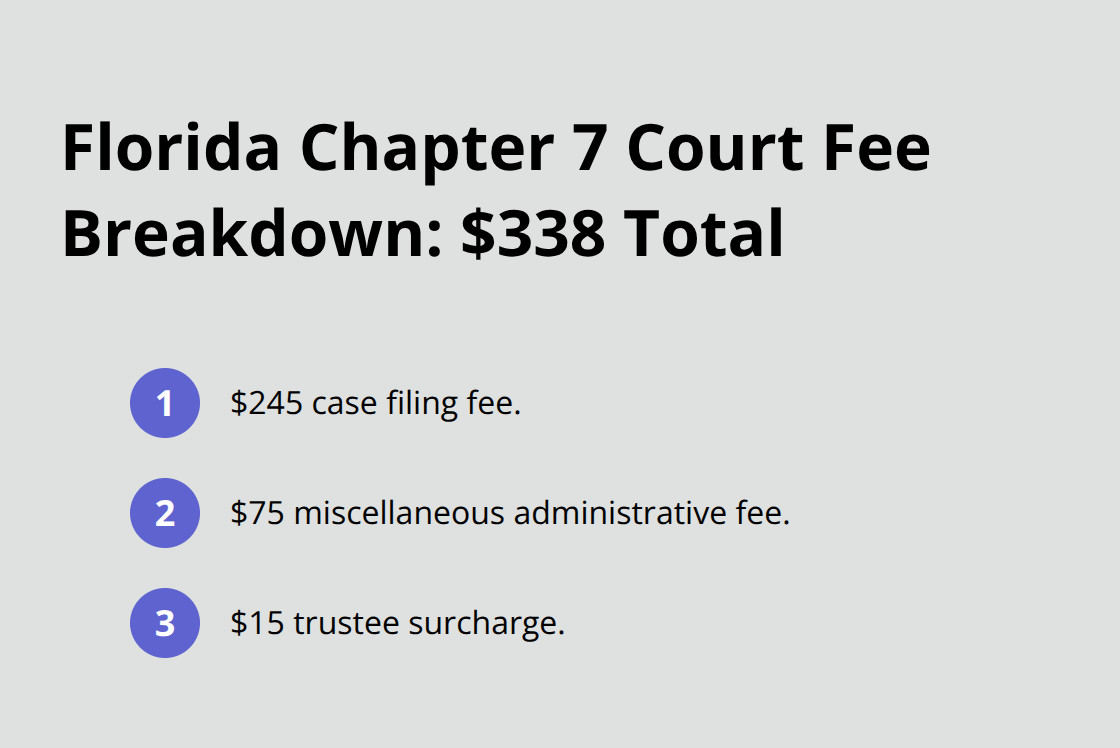
The court filing fee for Chapter 7 bankruptcy in Florida is $338, broken down into three components: a $245 case filing fee, a $75 miscellaneous administrative fee, and a $15 trustee surcharge. You owe this amount to the court at the time you file, and it remains the same regardless of your debt amount or financial situation. You must pay by money order or cashier’s check, payable to the Clerk of the U.S. Bankruptcy Court.
Cash, personal checks, and credit cards are not accepted, so plan accordingly when preparing your payment. If you file jointly with a spouse, you pay only one set of fees, not separate amounts for each person, which provides relief for married couples facing financial hardship together.
Payment Options That Make Filing Affordable
You don’t need to pay the full $338 upfront. The court allows you to spread the filing fee across up to four installment payments, with all payments due within 120 days of filing. Some courts grant extensions to 180 days if you request them. This flexibility means you could pay roughly $85 per installment, making the initial barrier to filing much lower. Missing an installment payment carries serious consequences-the court can dismiss your case without refunding what you’ve already paid, so treat these deadlines with the same priority you’d give to any court order. If you previously failed to pay filing fees in another bankruptcy case, a judge can deny your installment request or order you to pay those old fees before proceeding with your current case.
Fee Waivers for Those Who Qualify
If your household income falls below 150% of the federal poverty guidelines, you may qualify for a fee waiver that eliminates the $338 filing fee entirely. The federal poverty guidelines are published annually by the U.S. government, so check the current year’s thresholds before assuming you qualify. Fee waivers are not automatic-you must request one and the court must approve it-but approval happens regularly for debtors who genuinely cannot afford the fees. Combining a fee waiver with your mandatory credit counseling costs (typically under $15 before filing) and post-filing education courses (around $15–$50) keeps your baseline expenses minimal if you proceed without an attorney.
Beyond the Filing Fee: What Else You’ll Pay
The $338 filing fee represents only one piece of your total bankruptcy cost. You must also complete credit counseling before filing and financial management education after filing, which typically costs $10–$50 per course. If you hire an attorney to handle your case, you’ll face additional legal fees that vary based on your situation’s complexity. These additional expenses add up quickly, which is why understanding the full cost picture matters before you file.
What Costs Beyond the Filing Fee Should You Budget For
Mandatory Credit Counseling and Education Courses
Credit counseling and financial management courses add $25–$100 to your total bankruptcy expenses. You must complete a credit counseling session before filing, which typically costs $10–$50, and then finish a debtor education course after filing for roughly $15–$50. Some nonprofit providers waive these fees if your income qualifies for assistance, so ask about waivers when you enroll. The court will not discharge your debts without proof of completion, making these courses a fixed cost rather than something you can skip to save money.
Attorney Fees: Your Largest Variable Expense
Attorney fees represent the largest variable expense in your Chapter 7 filing. Typical Chapter 7 attorney fees in Florida range from $1,000 to $3,500, depending on your case complexity and the number of creditors involved. Some firms charge flat fees, while others bill hourly, so request a written fixed-fee agreement upfront to avoid surprises. All Chapter 7 attorney fees must be paid in full before filing-the court does not allow payment plans after you submit your petition like it does with Chapter 13.
Affordable Alternatives to Traditional Legal Representation
If you cannot afford attorney representation, free filing tools like Upsolve exist as a nonprofit alternative that has helped thousands discharge substantial debt without legal fees, though this route requires you to handle paperwork preparation yourself. This option works well for straightforward cases with few creditors and no significant assets to protect.
Document Preparation and Additional Filing Costs
Document preparation and filing expenses beyond attorney fees typically include printing costs for 60+ pages of forms, mailing expenses, and potential amendments to your creditor list, which together rarely exceed $100–$200. The U.S. Courts Bankruptcy Fee Schedule also charges $0.50 per page for photocopies and $0.10 per page for public access through PACER if you need court records, but these costs remain minor compared to your core filing expenses.
Calculating Your Total Chapter 7 Filing Cost
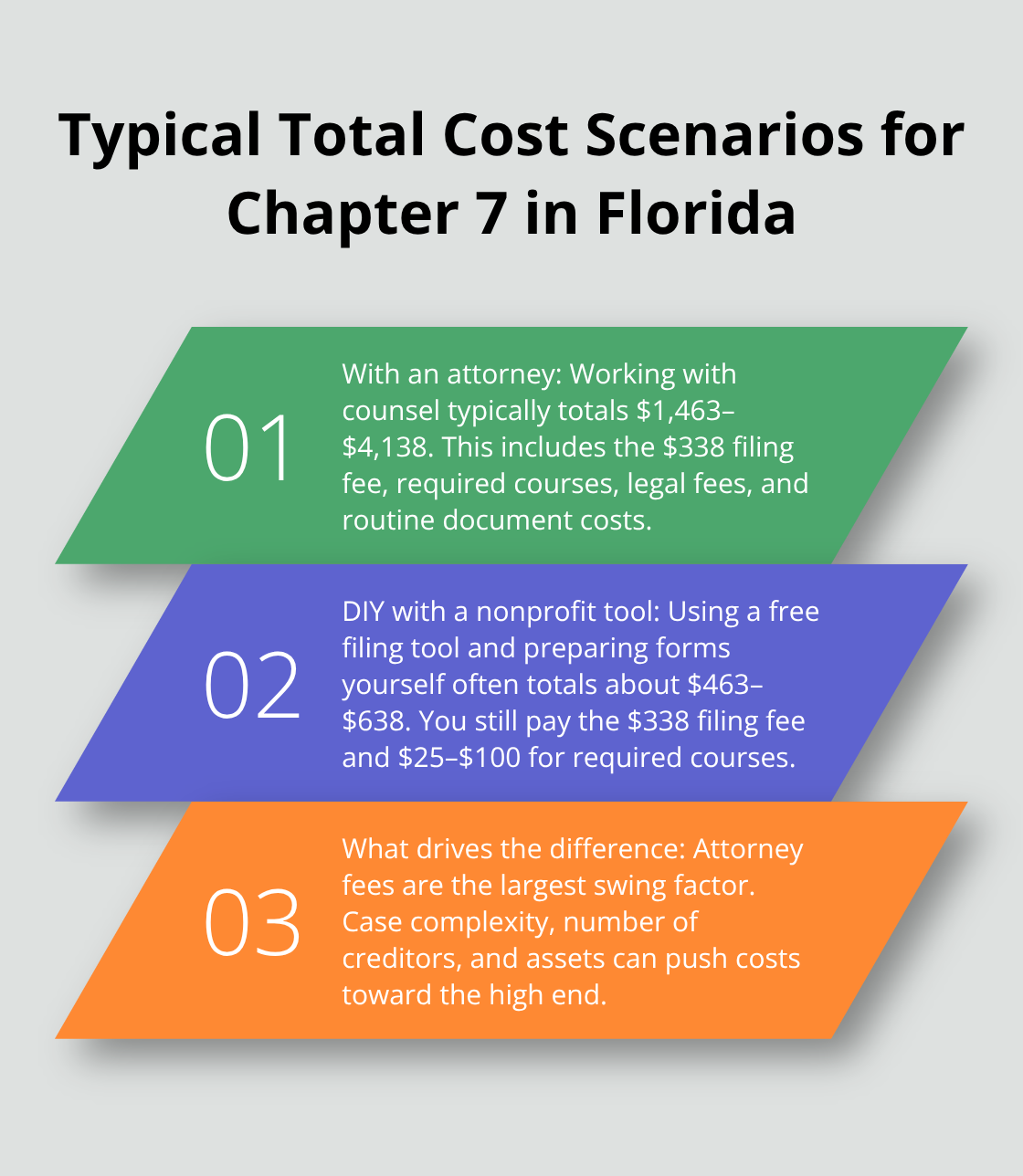
Adding everything together-the $338 filing fee, $25–$100 in counseling courses, $1,000–$3,500 in attorney fees if you hire counsel, and $100–$200 in document preparation-your total Chapter 7 filing cost typically ranges from $1,463 to $4,138 if you work with an attorney. If you use a free filing tool and handle preparation yourself, you could reduce this to roughly $463–$638, though you’ll need confidence in managing complex bankruptcy forms correctly. Understanding these costs helps you explore strategies to reduce your overall expenses, which we cover in the next section.
How to Cut Your Chapter 7 Filing Costs in Florida
Fee Waivers Eliminate Your Court Filing Fee
The $1,463 to $4,138 total you calculated earlier assumes you hire an attorney and pay all standard fees. That number drops significantly if you know where to negotiate and what assistance programs actually exist. Fee waivers eliminate your $338 court filing fee entirely if your household income sits below 150% of the federal poverty guidelines, which means a family of four earning less than roughly $39,000 annually qualifies in 2025. Request the waiver when you file your petition, and the court reviews it based on your schedules of income and expenses. If approved, you’ve immediately saved $338 with no hidden catches.
Installment Payments Reduce Your Upfront Burden
For those who don’t qualify for a full waiver, the court’s installment payment option spreads your $338 across four payments over 120 days, reducing your upfront cash requirement to around $85 per installment. Some courts grant extensions to 180 days if you request them, which further stretches your payments. This matters because many people delay filing simply because they cannot produce $338 immediately, yet they could manage four smaller payments without disrupting their budget.
Attorney Fees: Where Real Savings Happen
Attorney fees represent your largest opportunity for savings, and this is where your opinions and expectations matter most. Chapter 7 attorney fees in Florida range from $1,000 to $3,500, but flat-fee agreements are standard in this practice area, meaning you know your total cost upfront with no surprises. Request written fee agreements from multiple firms and compare what services each includes. Some attorneys charge $1,000 for straightforward cases with few creditors and no asset complications, while others quote $2,500 or higher for cases involving second mortgages, business interests, or numerous creditors.
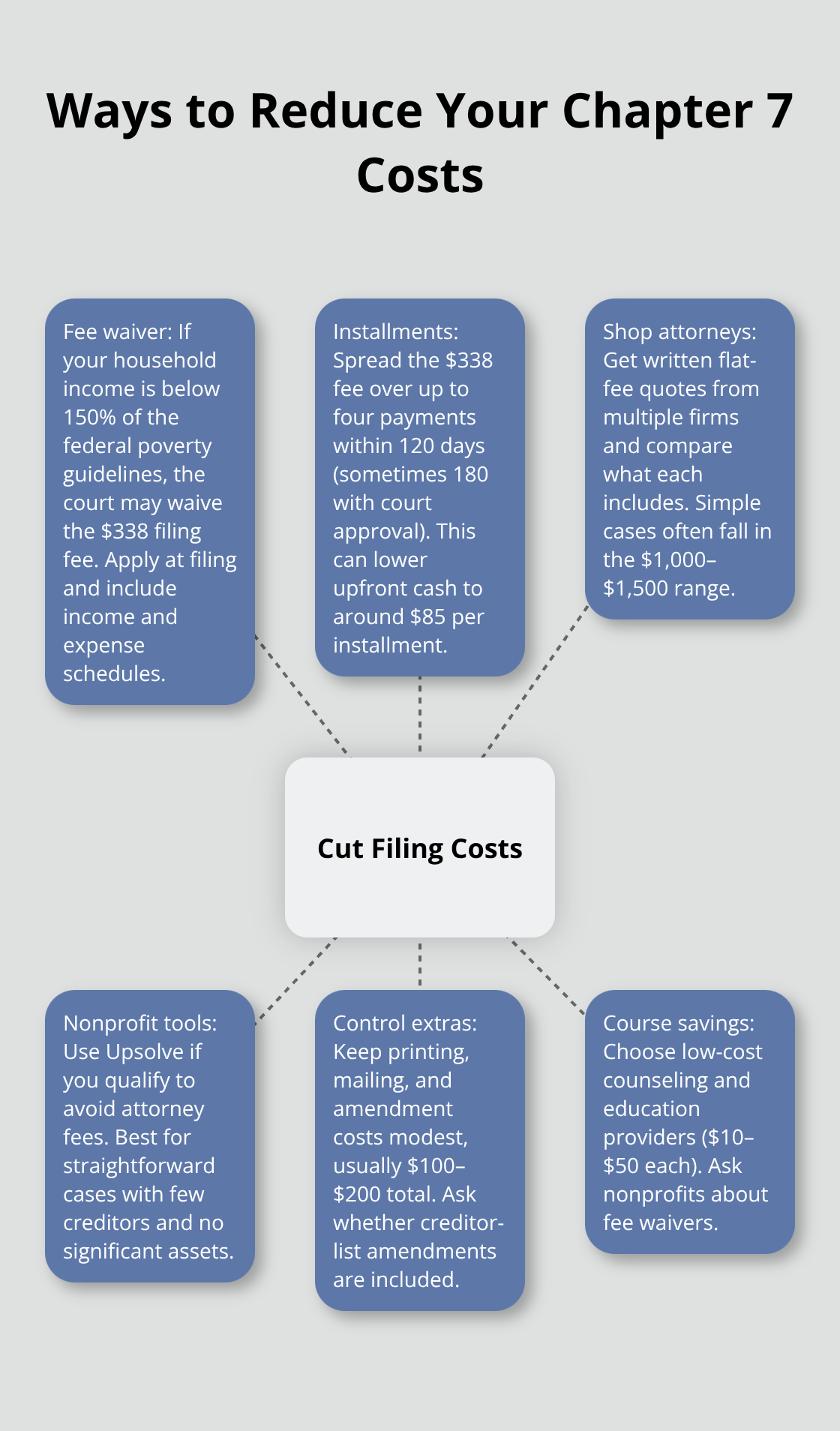
Ask each firm whether their fee covers amendments to your creditor list, which typically cost $34 per amendment if filed separately. If you have a simple financial situation with minimal assets and under ten creditors, aggressive shopping will find you representation in the $1,000 to $1,500 range.
Free Filing Tools for Budget-Conscious Filers
The nonprofit Upsolve platform offers free Chapter 7 filing tools for those whose income qualifies, having helped thousands avoid attorney fees entirely, though this requires you to manage form preparation independently. The $338 filing fee plus $25 to $100 in mandatory counseling courses means your absolute minimum cost stays around $363 to $438 without legal representation, provided you navigate forms correctly without errors that might force you to refile and lose your initial filing fee. This option works well for straightforward cases with few creditors and no significant assets to protect.
Final Thoughts
Filing Chapter 7 bankruptcy in Florida costs between $363 and $4,138 depending on whether you hire an attorney and qualify for fee assistance. The court filing fee of $338 forms your baseline cost, with mandatory credit counseling adding $25 to $100 and attorney representation ranging from $1,000 to $3,500 for those who choose legal help. If your income falls below 150% of the federal poverty guidelines, a fee waiver eliminates the court filing fee entirely, and installment payment plans spread your costs across 120 days to make the initial financial barrier manageable.
The upfront expenses matter far less than the long-term financial relief you gain. Chapter 7 bankruptcy discharges unsecured debts like credit cards, medical bills, and personal loans, giving you a genuine fresh start rather than years of struggling with creditors. The cost to file Chapter 7 bankruptcy becomes insignificant when compared to the years of wage garnishments, collection calls, and mounting interest you’d face without filing.
We at Harnage Law, PLLC help individuals and families in Florida overcome financial challenges by providing legal guidance through every step of the bankruptcy process. Contact us for a free consultation to discuss your costs, explore fee waivers and payment plans, and determine whether Chapter 7 bankruptcy makes sense for your circumstances. Visit https://chapter7florida.com to schedule your consultation and take the first step toward financial relief.