
Chapter 7 bankruptcy offers Florida residents a powerful path to eliminate overwhelming debt and rebuild their financial future. The advantages of bankruptcy Chapter 7 include complete discharge of most unsecured debts and immediate protection from creditor harassment.
We at Harnage Law, PLLC understand that maximizing these benefits requires strategic planning and careful execution. Smart preparation can mean the difference between losing valuable assets and keeping your home, car, and personal belongings.
What Makes Chapter 7 Bankruptcy So Powerful
Complete Debt Elimination for Most Unsecured Debts
Chapter 7 bankruptcy eliminates credit card debt, medical bills, personal loans, and payday loans entirely. Federal Reserve data shows the average American household carries $6,194 in credit card debt, which makes this complete elimination transformative for Florida families. The discharge occurs automatically within 60 to 90 days after you file, assuming no creditor objects.
Student loans remain non-dischargeable except in rare cases of undue hardship. Child support and recent tax debts also survive bankruptcy. Florida residents benefit from permanent retention of their discharge papers as proof that eliminated debts cannot resurface later.
Immediate Protection Through Automatic Stay
The automatic stay activates the moment you file your Chapter 7 petition and stops all collection activities instantly. Creditors must halt phone calls, letters, lawsuits, wage garnishments, and foreclosure proceedings within 24 hours of your petition. This protection extends to utility shutoffs and gives you 20 days to arrange adequate assurance for future service.
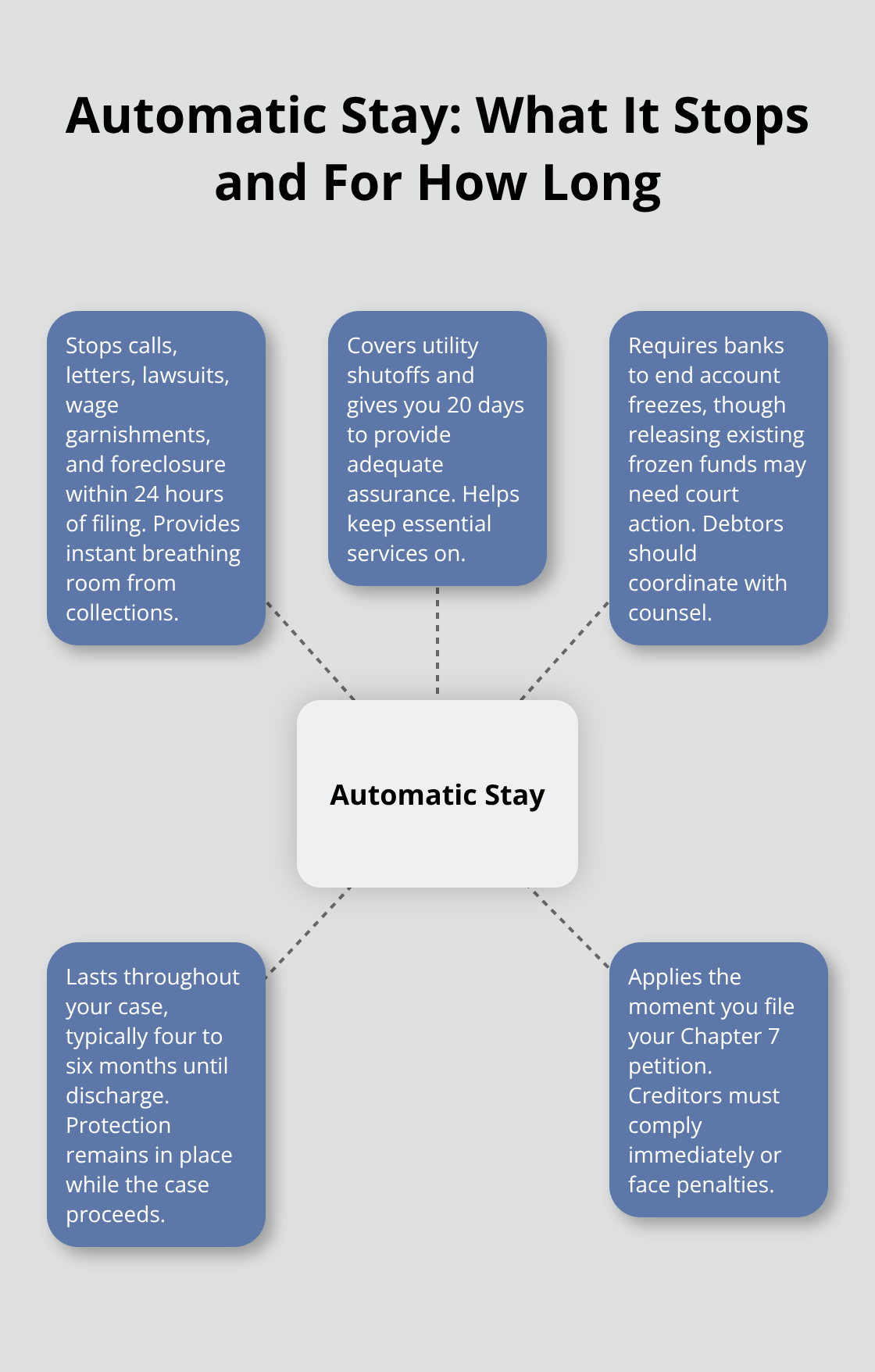
Bank account freezes must also stop, though existing frozen funds may require court intervention to release. The stay remains in effect throughout your case, typically four to six months until discharge. Florida courts process approximately 50,000 bankruptcy cases annually, with most debtors receiving this immediate relief successfully.
Enforcement Powers That Protect You
Creditors who violate the automatic stay face monetary sanctions and potential contempt charges. Federal bankruptcy courts take these violations seriously and impose penalties that range from $1,000 to $10,000 per violation. This enforcement mechanism makes the protection remarkably effective and gives debtors real leverage against aggressive creditors.
The court can also award attorney fees to debtors when creditors violate the stay. These enforcement powers transform the debtor-creditor relationship and put you in a position of strength rather than constant defense. Smart asset protection strategies build on this foundation to maximize your fresh start opportunities.
How Can You Protect Assets During Chapter 7
Florida Homestead Exemption Maximizes Property Protection
Florida provides one of the most generous homestead exemptions in America and protects unlimited home equity for primary residences. This exemption applies to up to half an acre in municipalities or 160 acres in rural areas, which makes Florida a debtor-friendly state. The homestead exemption covers mobile homes permanently attached to land and cooperative apartments where you hold ownership interest.
You must establish Florida residency and occupy the property as your primary residence for at least 1,215 days before you file to claim the full unlimited exemption. Recent residents can only protect $170,350 in home equity under federal caps. Property taxes must remain current to maintain homestead status, and the exemption extends to survive spouses and minor children.
Personal Property Exemptions Cover Essential Assets
Florida law protects $1,000 in personal property per person or $2,000 for married couples who file jointly. This wildcard exemption covers cash, bank accounts, jewelry, household goods, and electronics. Motor vehicles receive protection up to $1,000 in equity, though this amount doubles for married couples. Florida residents can also protect 100% of wages from the head of household who supports dependents.
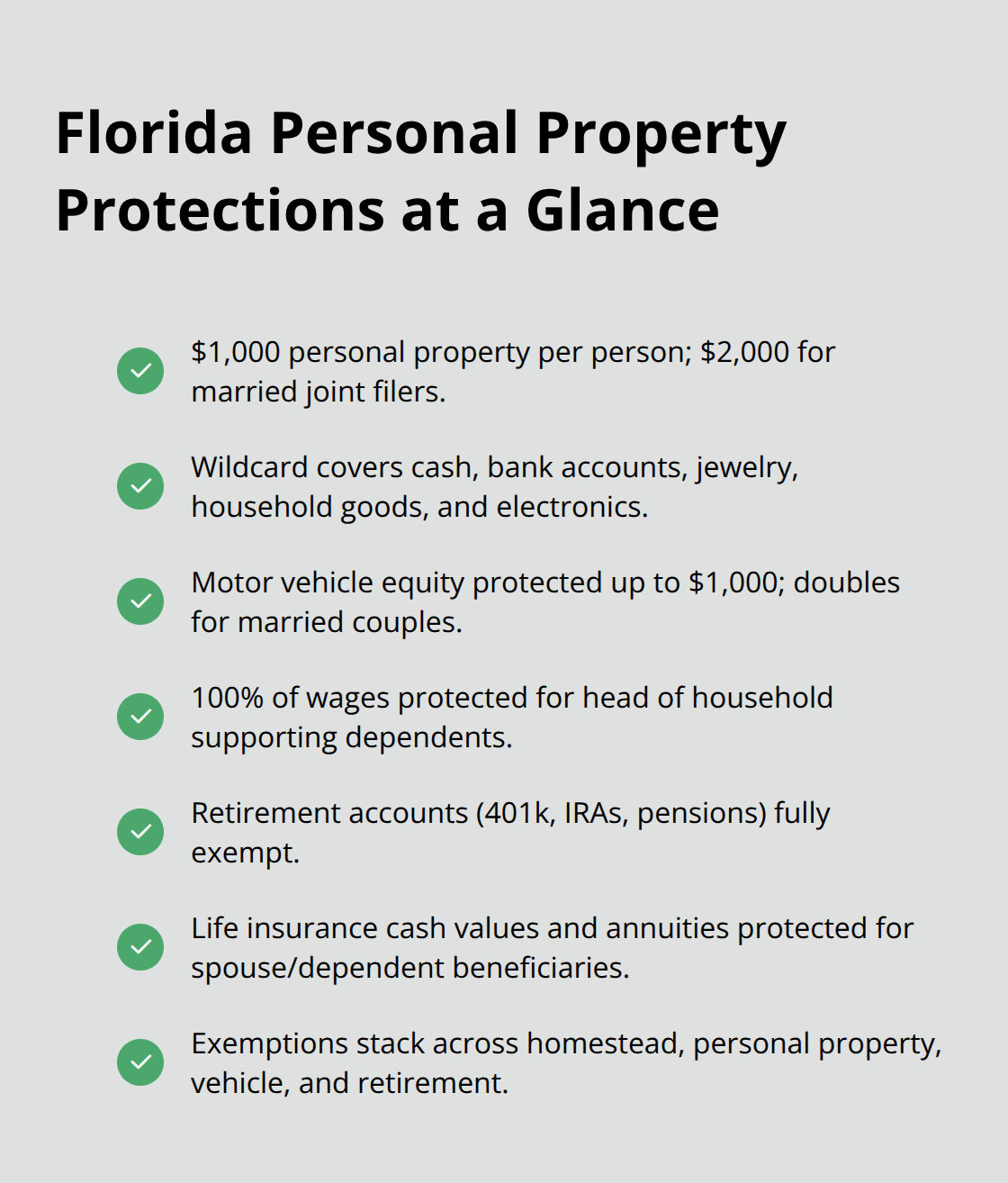
Retirement accounts (401k plans, IRAs, and pension benefits) remain fully exempt from creditor claims. Life insurance cash values and annuities receive complete protection when beneficiaries are spouses or dependents. These exemptions stack together, which means you can protect your homestead, personal property, vehicle, and retirement accounts simultaneously without choice between exemption systems.
Strategic Timing Prevents Asset Loss
Stop credit card use at least 90 days before you file to avoid luxury purchase challenges that could make recent debts non-dischargeable. Pay down your mortgage or make necessary home improvements if you have excess cash, since these payments convert vulnerable cash into protected home equity. Avoid asset transfers to family members within two years of your petition, as trustees can reverse these transfers and recover the property for creditors.
Schedule your petition date strategically to minimize cash balances and maximize exemption protection. Florida residents should complete required credit counseling exactly 180 days before their intended petition date to avoid last-minute delays. Document all pre-petition financial decisions with clear records that show legitimate purposes rather than attempts to hide assets from creditors.
These asset protection strategies work best when you avoid common mistakes that can jeopardize your fresh start and reduce the benefits Chapter 7 provides.
What Bankruptcy Mistakes Cost You Money
Florida residents lose thousands of dollars in Chapter 7 benefits through preventable mistakes that trustees catch immediately. The bankruptcy system demands complete honesty, and any attempt to hide information will backfire against your case.
Incomplete Asset and Debt Disclosure Destroys Your Case
You must list all debts or those creditors never receive notice of your bankruptcy and can continue collection efforts after your discharge. The Federal Rules of Bankruptcy Procedure require disclosure of every asset worth more than $50, including forgotten bank accounts, pending tax refunds, and inherited property.
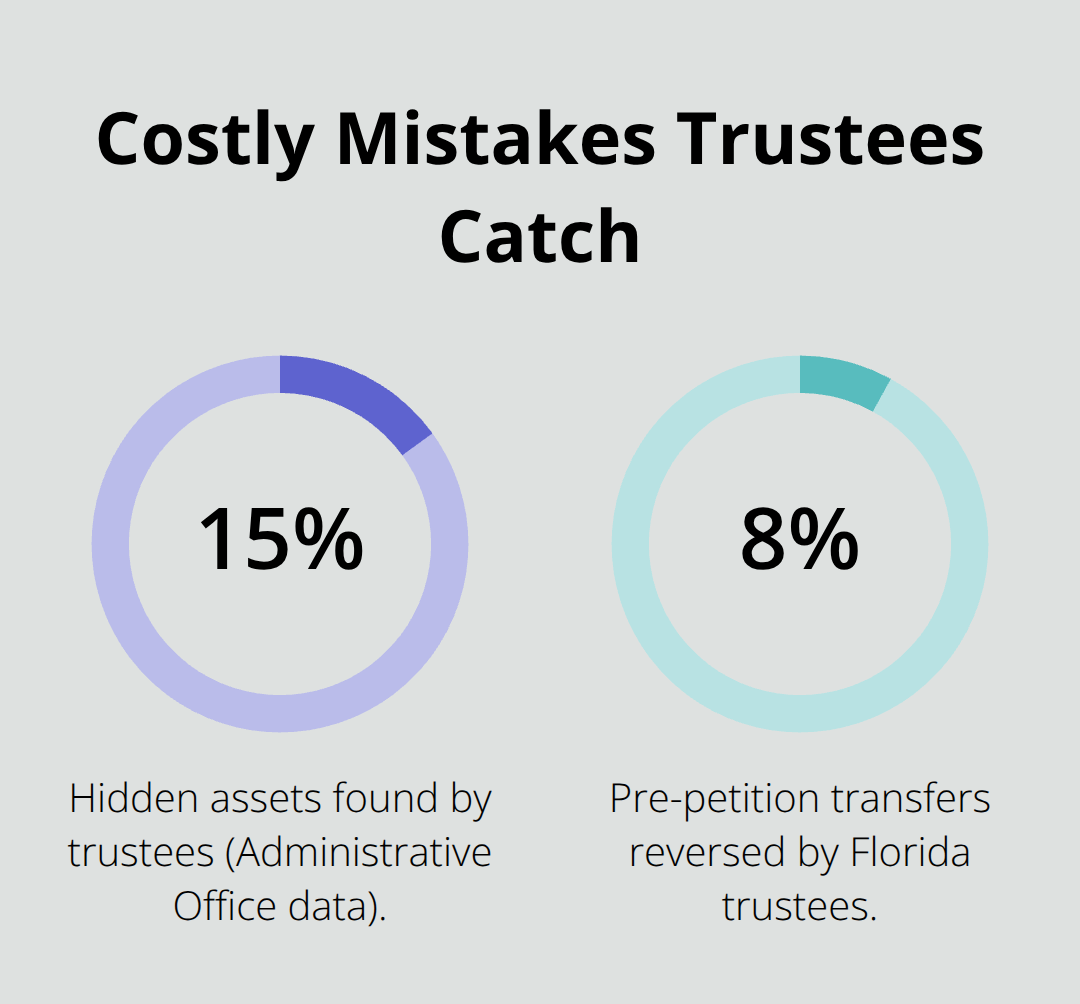
Trustees review your credit reports, bank statements, and public records to verify accuracy. They find hidden assets in 15% of cases according to Administrative Office data. Missing debts cannot receive discharge protection, which defeats the entire purpose of your petition.
Debtors lose their discharge entirely when they forget to list a business partnership or fail to mention a lawsuit settlement. Trustees have two years to reopen your case for asset recovery, and they will seize any property you failed to disclose initially.
Large Purchases Before Filing Create Legal Problems
Large purchases within 70 days before you file create presumptions of fraud that require court hearings to overcome. Credit card charges over $800 for luxury goods or services become non-dischargeable automatically under federal law (11 U.S.C. § 523(a)(2)).
Cash advances over $1,000 within 70 days also survive bankruptcy and remain your responsibility permanently. These debts stick with you even after your discharge becomes final.
Property Transfers to Family Members Backfire
Property transfers to relatives within two years face reversal through trustee powers. The trustee can sue your family members to recover transferred assets for creditor distribution.
Florida trustees reverse approximately 8% of pre-petition transfers and recover an average of $12,000 per successful action. Strategic mortgage payments or necessary home repairs represent legitimate uses of pre-petition funds.
Transferring your car title to your brother will cost you both the vehicle and potential legal fees when the trustee recovers it. These transfers also create family conflicts that last long after your bankruptcy case closes.
Final Thoughts
Chapter 7 bankruptcy delivers powerful debt relief when Florida residents plan strategically and execute their cases properly. The advantages of bankruptcy Chapter 7 include complete elimination of unsecured debts, immediate creditor protection, and retention of essential assets through Florida’s generous exemptions. Smart preparation protects your homestead while you achieve a genuine fresh start.
Florida’s unlimited homestead exemption and automatic stay provisions create significant opportunities for debt relief. Proper timing prevents costly mistakes that reduce your benefits or create legal complications. Honest disclosure and strategic pre-petition decisions maximize the protection available under federal and state law.
We at Harnage Law, PLLC guide Florida families through the Chapter 7 bankruptcy process while protecting their most valuable assets. Professional legal support helps you avoid disclosure errors and timing mistakes that cost thousands of dollars in lost benefits (or potential legal problems). The path to financial recovery requires action before creditor pressure becomes overwhelming.