At Harnage Law, PLLC, we understand that financial struggles can be overwhelming. Many Floridians wonder how to file bankruptcy Chapter 7 with no money.
This guide will walk you through the process of filing Chapter 7 bankruptcy for free in Florida. We’ll cover eligibility requirements, free resources, and a step-by-step approach to help you navigate this challenging time.
What Is Chapter 7 Bankruptcy in Florida?
Definition and Process
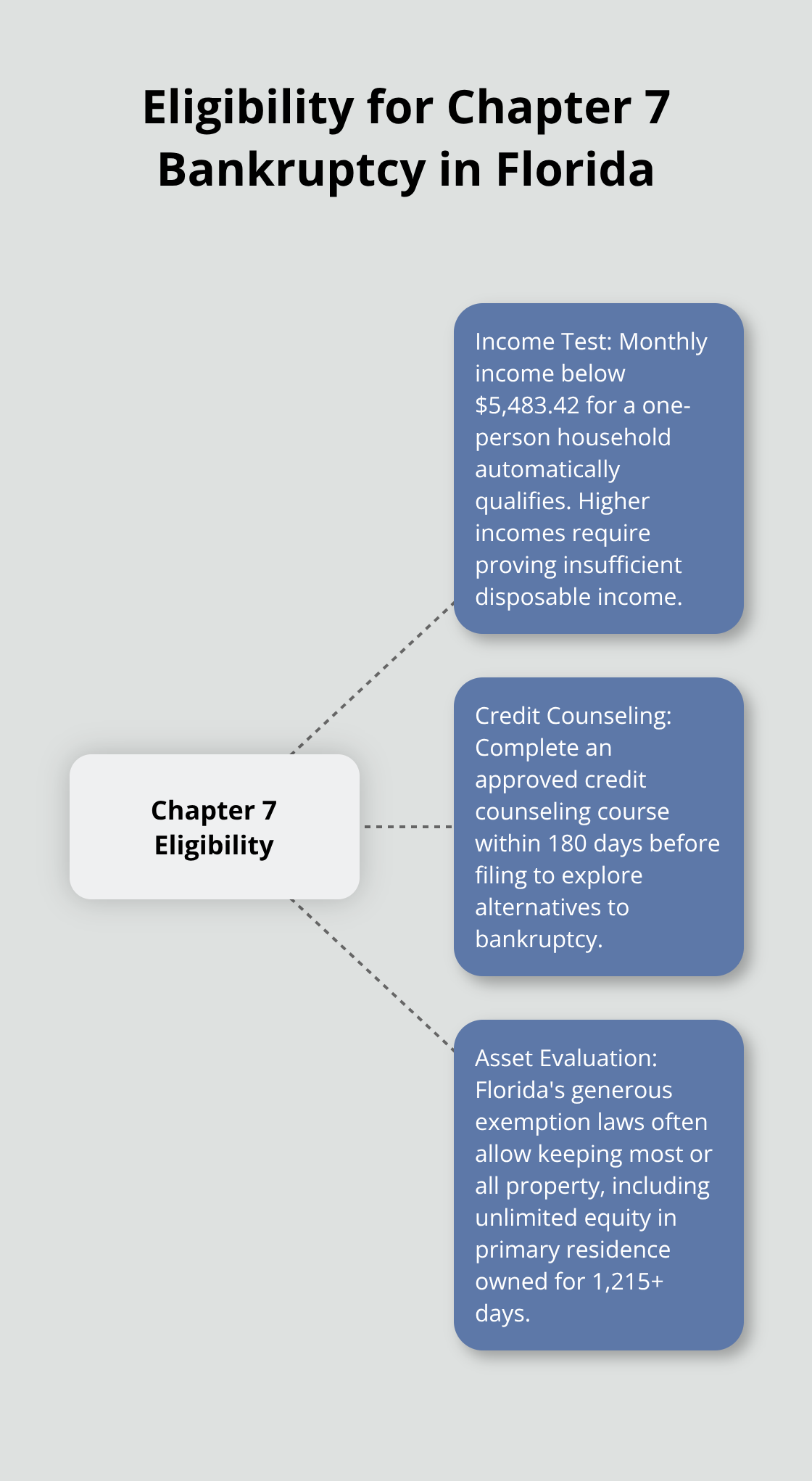
Chapter 7 bankruptcy in Florida allows individuals to eliminate most unsecured debts and start fresh financially. It’s often called “liquidation bankruptcy” because a court-appointed trustee may sell some assets to pay off creditors. However, Florida’s generous exemption laws often allow people to keep most or all of their property.
Eligibility Requirements
To qualify for Chapter 7 bankruptcy in Florida, you must pass the means test. This test compares your income to the state’s median income. As of 2025, the median monthly income for a one-person household in Florida is $5,483.42. If your income falls below this threshold, you automatically qualify. If it’s higher, you must show that you don’t have enough disposable income to repay your debts.
You also need to complete a credit counseling course from an approved provider within 180 days before filing. This requirement helps ensure you’ve explored all alternatives to bankruptcy.
Benefits of Filing Chapter 7
Filing Chapter 7 bankruptcy in Florida offers several advantages:
- Debt Discharge: Most unsecured debts (including credit card balances and medical bills) are wiped out.
- Quick Process: The entire Chapter 7 process typically takes about four months from filing to discharge.
- Asset Protection: Florida’s homestead exemption allows you to protect unlimited equity in your primary residence (provided you’ve owned it for at least 1,215 days).
- Automatic Stay: As soon as you file, creditors must stop all collection efforts (including lawsuits and wage garnishments).
Impact on Financial Future
While Chapter 7 bankruptcy can provide immediate relief, it’s important to understand its long-term effects. The bankruptcy will remain on your credit report for 10 years, which can affect your ability to obtain credit, housing, or even employment. However, many people find that the benefits of a fresh start outweigh these temporary challenges.
As we move forward, let’s explore the free resources available to help you navigate the Chapter 7 bankruptcy process in Florida.
Where Can I Find Free Bankruptcy Help in Florida?
Legal Aid Organizations
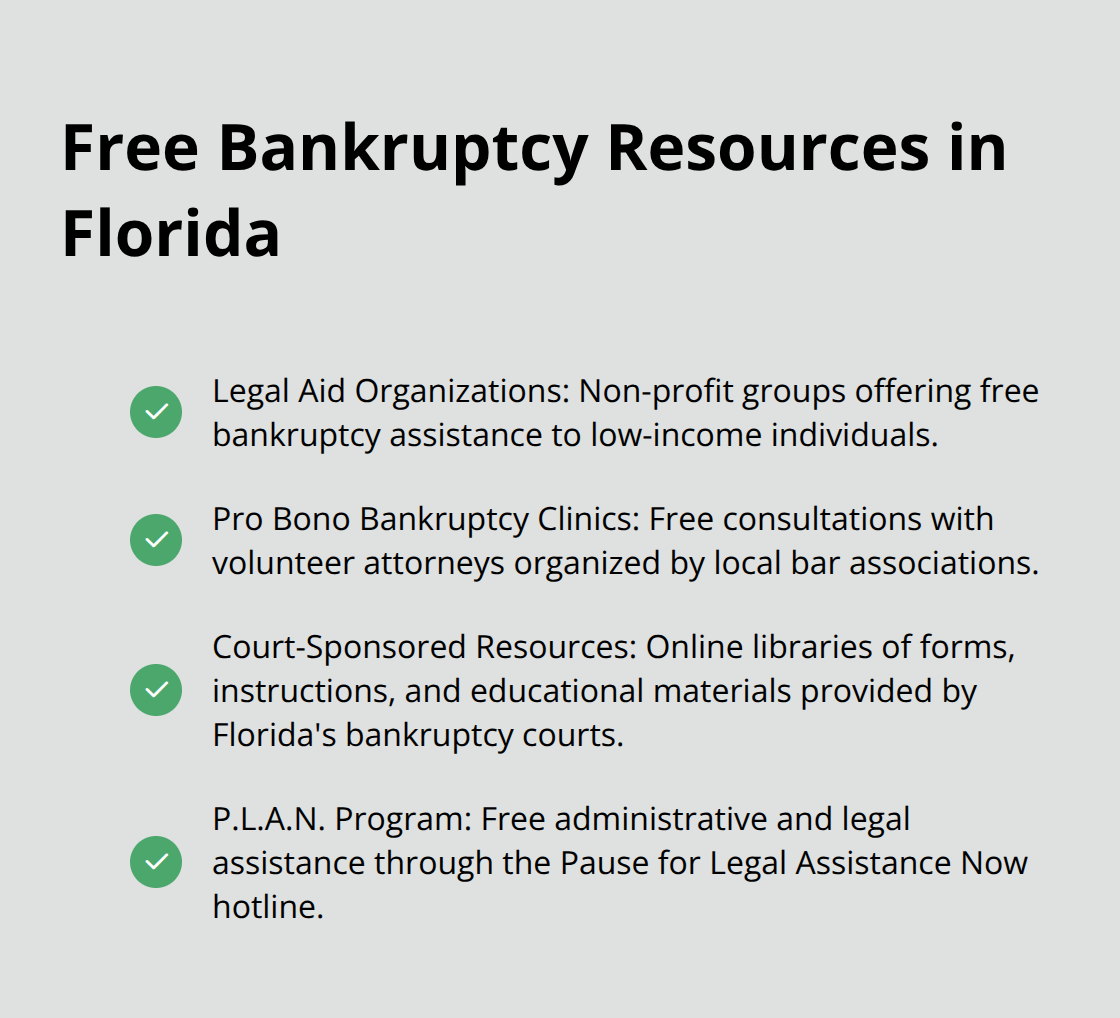
Florida offers numerous legal aid organizations that provide free bankruptcy assistance to low-income individuals. These non-profit groups offer services ranging from advice to full representation. The Legal Aid Society of Palm Beach County, for example, helps eligible residents navigate the bankruptcy process at no cost. To find a legal aid organization near you, visit the Florida Bar Foundation’s website and use their directory of legal aid providers.
Pro Bono Bankruptcy Clinics
Many local bar associations in Florida organize pro bono bankruptcy clinics. These clinics typically offer free consultations with volunteer attorneys who can answer your questions about Chapter 7 bankruptcy. The Jacksonville Bar Association holds regular bankruptcy clinics where you can get free legal advice. Check with your local bar association to see if they offer similar services.
Court-Sponsored Resources
Florida’s bankruptcy courts provide a wealth of free self-help resources. The U.S. Bankruptcy Court for the Middle District of Florida offers an extensive online library of forms, instructions, and educational materials. They provide instructional videos in English, Spanish, and Creole to guide you through the filing process.
P.L.A.N. Program
One particularly useful program is P.L.A.N. (Pause for Legal Assistance Now), which offers free administrative and legal assistance. You can call 866-944-6421 to speak with a volunteer lawyer at no cost. While this doesn’t create an attorney-client relationship, it can provide valuable guidance as you navigate the bankruptcy process.
Professional Legal Assistance
While these resources are helpful, bankruptcy law is complex. If your case involves complicated issues, it’s often worth consulting with a bankruptcy attorney. Professional legal services can provide a more in-depth evaluation of your specific situation and guide you through the intricacies of Chapter 7 bankruptcy. Many attorneys offer free consultations to help you understand your options before committing to their services.
As we move forward, let’s explore the step-by-step process of filing for Chapter 7 bankruptcy in Florida without incurring costs.
How to File Chapter 7 Bankruptcy for Free in Florida
Filing for Chapter 7 bankruptcy in Florida without costs requires careful planning and diligence. This guide will walk you through the process step-by-step.
Complete Credit Counseling
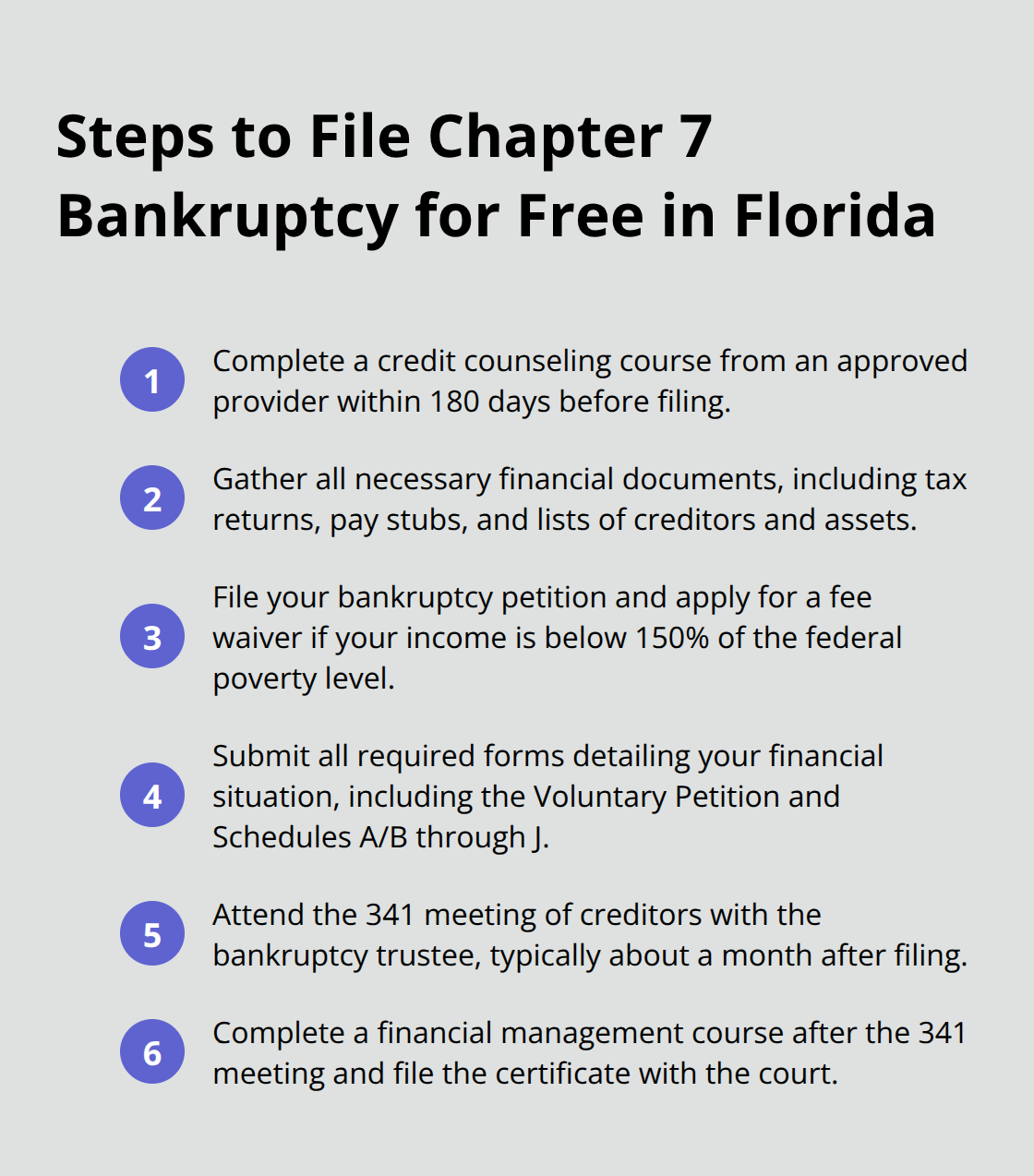
Before you file, you must take a credit counseling course from an approved provider. The U.S. Trustee’s website lists agencies that offer free or low-cost courses. These courses typically last about 90 minutes and can be completed online or over the phone. After you finish, you’ll receive a certificate valid for 180 days. File your bankruptcy petition within this timeframe.
Gather Your Financial Documents
Collect all necessary paperwork. You’ll need:
- Tax returns (last two years)
- Pay stubs or income records (past six months)
- A list of all creditors and debts
- Bank statements (last three months)
- A list of assets and their estimated values
Thoroughness is key. Missing information can delay your case (or even lead to dismissal).
File Your Bankruptcy Petition
To file without cost, apply for a fee waiver. As of 2025, the Chapter 7 filing fee is $338. You qualify for a waiver if your income falls below 150% of the federal poverty level ($1,882.50 for a single-person household in Florida).
If eligible, submit Official Form 103B (Application to Have the Chapter 7 Filing Fee Waived) with your bankruptcy petition. A judge will review your application and decide whether to grant the waiver.
When you file, submit several forms detailing your financial situation:
- Voluntary Petition for Individuals Filing for Bankruptcy (Form 101)
- Schedules A/B through J
- Statement of Financial Affairs (Form 107)
- Means Test forms
The U.S. Bankruptcy Court for the Middle District of Florida provides detailed instructions and forms on their website. Use these resources to ensure you complete everything correctly.
Attend the 341 Meeting of Creditors
About a month after filing, you’ll attend a 341 meeting (also known as the meeting of creditors). Despite its name, creditors rarely attend. Instead, you’ll meet with the bankruptcy trustee assigned to your case.
The trustee will ask you questions under oath about your financial situation and the information in your bankruptcy forms. This meeting typically lasts about 10 minutes. Answer honestly and directly.
After the meeting, complete a financial management course. Like the initial credit counseling, this course must come from an approved provider. Once you finish, file the certificate with the court.
While filing for free is possible, professional guidance can be beneficial. Many attorneys offer free consultations to help you understand your options and determine the best path for your financial future.
Final Thoughts
Filing for Chapter 7 bankruptcy in Florida without money requires careful planning and the right resources. You must complete credit counseling, gather financial documents, and apply for a fee waiver. The process involves filing your bankruptcy petition, attending the 341 meeting of creditors, and completing a financial management course.
Bankruptcy law can be complex, and professional guidance often proves invaluable. Many attorneys offer initial consultations at no cost, allowing you to explore your options before making a decision. After filing, you should focus on rebuilding your financial future by creating a budget, saving money, and improving your credit score.
If you want to know how to file bankruptcy Chapter 7 with no money, we at Harnage Law, PLLC can help. We understand the challenges you face and can guide you through the bankruptcy process (from start to finish). Our goal is to help you protect your assets and rebuild your financial future.